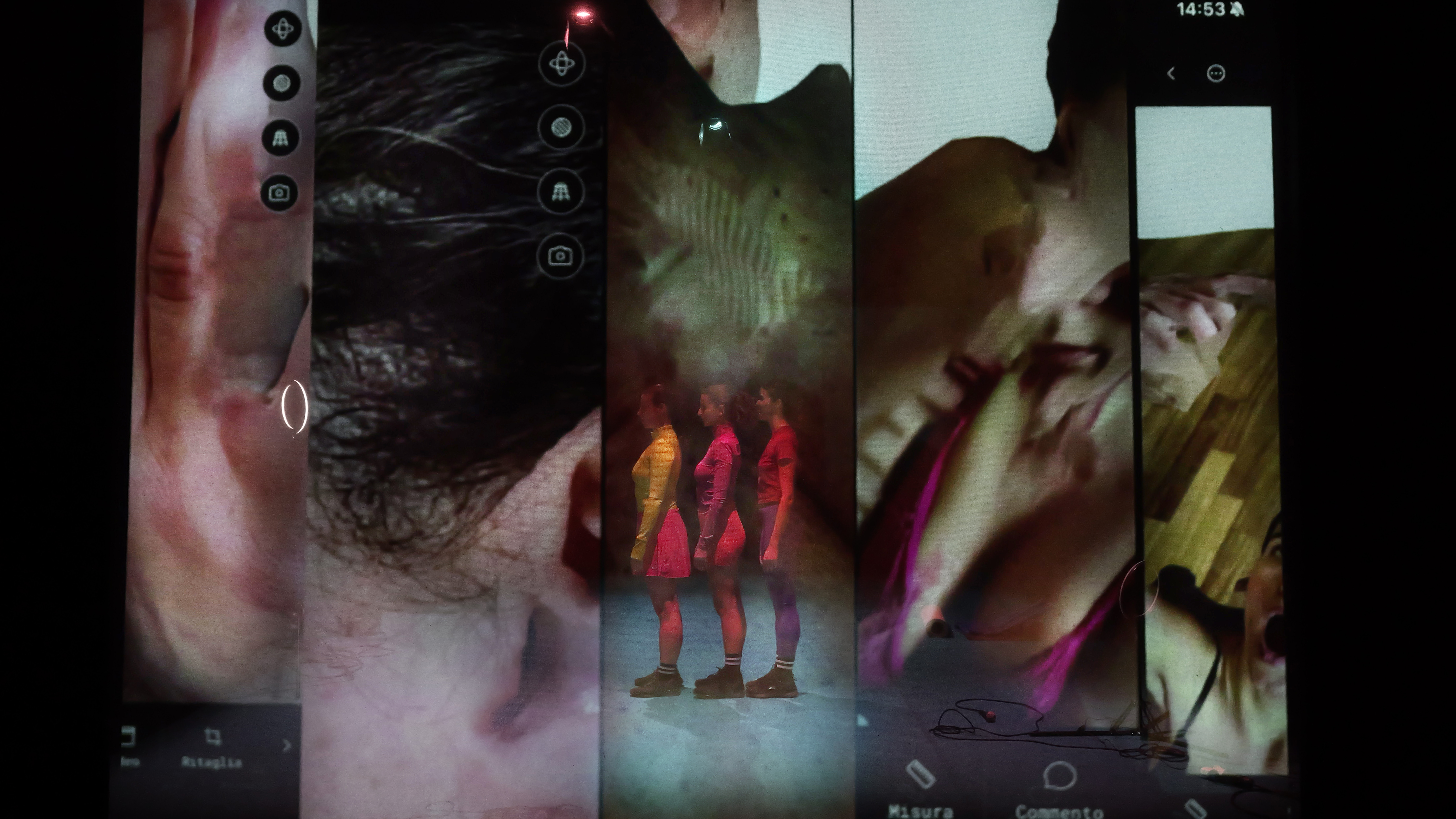
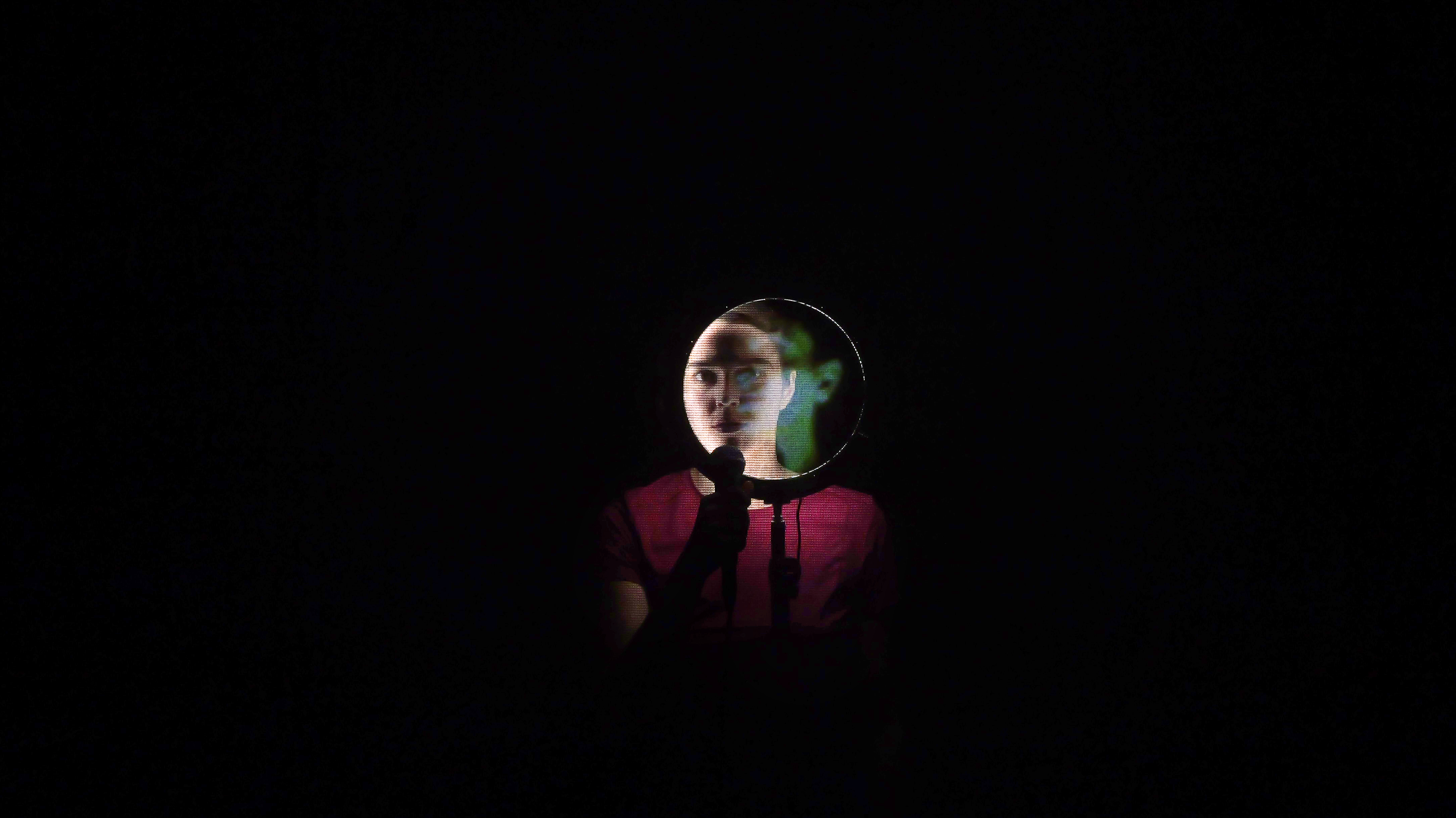
realised as research outcome of I year PhD research - XL Cycle (2024-27) “Theatre of Reality: Performing Arts and New Media”
Accademia Nazionale d’Arte Drammatica Silvio d’Amico, Rome, Italy
co-production: ResExtensa - Porta D’Oriente. Centro Nazionale di Produzione della Danza, Bari, IT
fellowship co-funded by Accademia Albertina di Belle Arti di Torino
Teatro Stabile di Torino - National Theatre
credits
conception, direction and dramaturgy / Maria Luigia Gioffrè
scene writing with performers (in a.o.) / Grazia Capraro, Giorgia Fagotto Fiorentini, Chiara Serafini
co-dramaturgy and multimedia design / Simone Rosset
light design/ Filippo Stabile sound compositions / Marco Miscioscia for ‘Cabinaa’
technicians/ Igor Renzetti (multimedia), Stefano Crialesi (sound), Vincenzo Perugini (sound) stage director and light technician/ Alberto Rossi video documentation/ Marco Bacci trailer/ Carlo Fabiano
The Veil of Veronica is the name traditionally associated with the venerated relic supposed to bear imprinted the “true face” of Christ. Due to its constitution of image not figuratively painted but emerging from a negative trace produced by the contact between flesh and fabric, this portrait is defined as acheropita—that is, not made by human hands, but generated through the imprint left by the face which wiped on the veil. In accordance with this belief, the name Veronica was later associated with the etymology of vera icona (“true image”): the trace of the face, replacing its representation, positioned itself as an iconoclastic truth in relation to the countless figurative depictions of Christ’s visage.
Likewise, online portraiture is composed of impressions of traces, extracted from data and imprinted in what—through technological objects—is visualised and synthesised at our eyes as an image: an acheropita image, therefore, as it is produced by the hands of technology.
In investigating the archipelago of theatricality and choreography that emerges, grows, and speaks through and within the reality of social media, generating unprecedented stages across displaced architectures and disossated subjectivities, to wit, in investigating a language of a “mediated liveness”, this performance does attempt a translation of such phenomena into the mortal, bleeding human body of the performer.
A body that becomes a site of resistance and passage, living and vanishing archive as well as postural inquiry into repertoires extracted from a “cold medium”—that of algorithmic scrolling across social media screens—and returned to the warmth of the stage. While not disregarding the agency of non-human matter and its dramaturgical potential, what is presented here nonetheless operates through the performer and places the human at its centre; loooking at it not as measured by the Renaissance compass, but exposing it to stumbling; a body born from the fallibility of linear perspective as paradigm of the real; a subject-object orphaned of any synopsis and engaged in a free-falling becoming, anchored only to cartographies informed by the drift of affects as anthropological form of knowledge.
It is indeed an expanded affective motility that moves us within the ecosystem of social media platforms: this diffused, threshold-reality relying on the resharing of snapshots, love dedications, IG stories, FB status, war videos, cute cats reels, seaside holidays, songs, voice messages, selfies, and vernacular dances produced from our bedrooms yet assembled into an ensemble of a co-being that is both immanent and distant.